
Country: Taiwan
Baseball Art Object: High-Performance Upcycled Baseball Jersey
Gallery Location: Fan Culture / Apparel Hall / Taiwan Apparel Gallery
1. Story & Evolution
The evolution of Taiwan’s baseball jersey is not a story of changing team colors or logo fonts; it is a story of material transcendence. Over the last three decades, Taiwan has transformed its jersey from a simple piece of sportswear into a living canvas that narrates the island’s battle against ecological waste.
- The 1990s – The Plastic Awakening: As Taiwan became a global hub for textile manufacturing, it also faced a mounting crisis of plastic waste. Early experiments began with melting down discarded PET bottles. The breakthrough was crude but revolutionary: for the first time, trash was being spun into thread.
- The 2010s – The Ocean & Agriculture Intervention: The evolution accelerated when the textile industry looked beyond land-based waste. Abandoned fishing nets were chemically depolymerized into ultra-durable nylon yarns. Simultaneously, agricultural byproducts—discarded oyster shells and spent coffee grounds—were crushed into micro-powders and infused into the polymer matrix, granting the jersey permanent, non-chemical odor control and thermoregulation.
- The 2020s – The Closed-Loop Masterpiece: Today, the evolution has reached “Textile-to-Textile” (T2T) recycling. Old jerseys and factory cutting scraps are chemically broken down to their molecular monomers and rebuilt into virgin-quality fibers, creating a jersey whose performance exceeds that of virgin polyester.
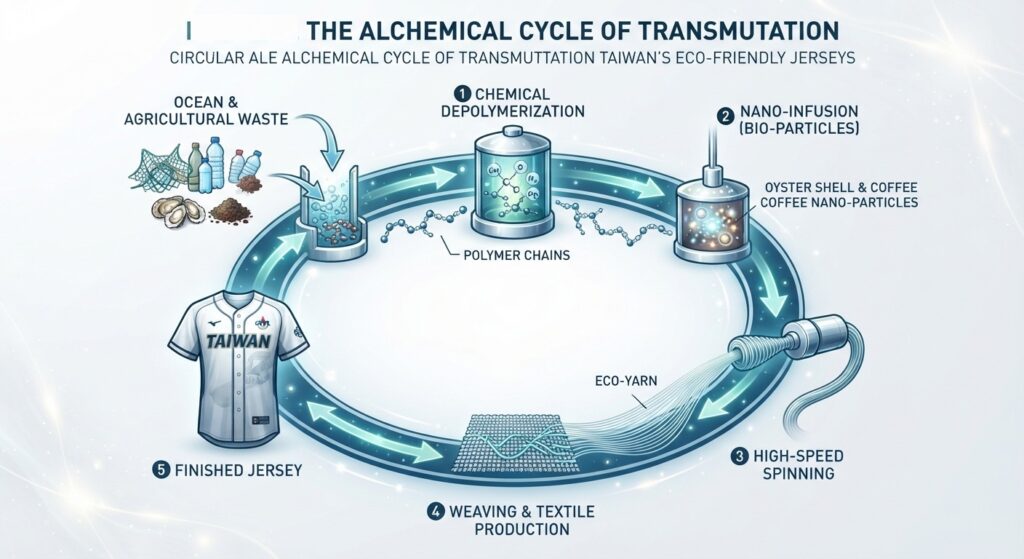
Figure 1. The Alchemical Cycle of Transmutation
This conceptual diagram illustrates the complete circular loop of Taiwan’s jersey production. Starting from the top-left (Ocean & Agricultural Waste), moving clockwise through Chemical Depolymerization, Nano-Infusion (Bio-particles), High-Speed Spinning, and finally returning as a Finished Jersey. The cycle visually emphasizes that there is no “end” to the material’s life—only continuous rebirth.
2. International Comparison & Innovation
While “sustainable sportswear” is a global buzzword, Taiwan’s execution is fundamentally different. The following table highlights how Taiwan elevates jersey production from a marketing narrative to a scientific and artistic mastery.
This table contrasts Taiwan’s vertically integrated, multi-source upcycling model against the linear or single-source models of the USA, Japan, and Europe. It emphasizes that Taiwan is the only region that combines ocean plastics, agricultural bio-waste, and closed-loop chemistry into a single garment.
Table 1. Comparative Analysis of Global Sustainable Sportswear Approaches
| Aspect | USA (Major Brands) | Japan (Premium Sportswear) | Europe (EU Eco-Regulation) | TAIWAN (The Artisan Model) |
|---|---|---|---|---|
| Core Raw Material | Post-consumer PET bottles | High-grade recycled polyester | Recycled nylon from carpets | Multi-source: Ocean plastics, abandoned fishing nets, oyster shell powder, & coffee ground bio-nano-particles. |
| Supply Chain Model | Fragmented; brands design, overseas factories produce. | Vertically integrated domestically. | Highly regulated, mechanical recycling. | Fully vertically integrated eco-chain. Entire process occurs within a 100-mile radius. |
| Performance Addition | Often loses performance after multiple washes. | Focuses on comfort and durability. | Focuses on material traceability. | Permanent Bio-Functionality: Natural cooling, rapid wicking, and odor absorption—without chemical coatings. |
| Philosophical Core | Eco-friendly as a marketing checkbox. | Eco-friendly as a cultural duty (mottainai). | Eco-friendly as a legal requirement. | Eco-friendly as Artistic Alchemy: Making the final product visually and tactilely superior to virgin materials. |
3. Unique Artistic Analysis
The true artistry of Taiwan’s eco-jersey lies in its tactile and visual subversion of expectation.
- The “Marble Vein” Aesthetic: Because the fibers are derived from multi-source waste (plastic, bio-matter, and nylon), the dye absorption rates differ microscopically. When color is applied, the jersey fabric often exhibits a subtle, unpredictable, vein-like depth—reminiscent of natural marble—that solid-color virgin polyester cannot replicate.
- The Erasure of the “Recycled Stigma”: Historically, recycled fabrics looked dull. The Taiwanese jersey, however, utilizes high-twist yarn techniques that create a silk-like drape and a subtle, pearlescent sheen. The visual art here is one of deception: it looks luxurious, yet its origin is refuse.
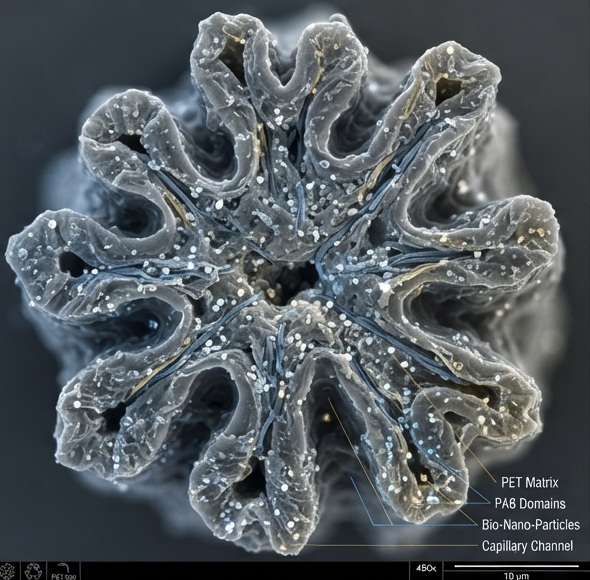
Figure 2. Microscopic Cross-Section of Multi-Source Polymer Blend
A high-magnification (400x) microscopic photograph of the jersey’s fiber cross-section. The irregular, multi-lobed structure is a result of blending PET (from bottles), PA6 (from fishing nets), and bio-nano-particles (from coffee/ shells). This specific geometry is what creates rapid moisture capillary action and the unique “marble” light-refraction effect visible to the naked eye.
4. Artistic Transformation and Creation (The Gallery Installation)
To showcase this “alchemy,” the gallery presents a three-part immersive installation titled “From Earth, to Ocean, to Body.”
- The “Contrast Columns” (Visual Shock): The exhibition begins with two towering glass cylinders. The left column is filled with the raw, “ugly” inputs (tangled fishing nets, crushed shells, brown coffee grounds). The right column contains the output: a brilliantly white, glowing jersey suspended in mid-air.
- The “Spinning Wheel” Projection: A circular screen plays a macro-cinematic loop of the polymer-extrusion process, where liquid polymer glows like molten gold as it is forced through spinnerets.
- The “Jersey Canvas” (Finale): A game-worn jersey is mounted on a heat-reactive mannequin. As visitors approach, the mannequin warms up, subtly shifting the jersey’s color from deep ocean blue to vibrant emerald green—representing the “living” nature of the material.
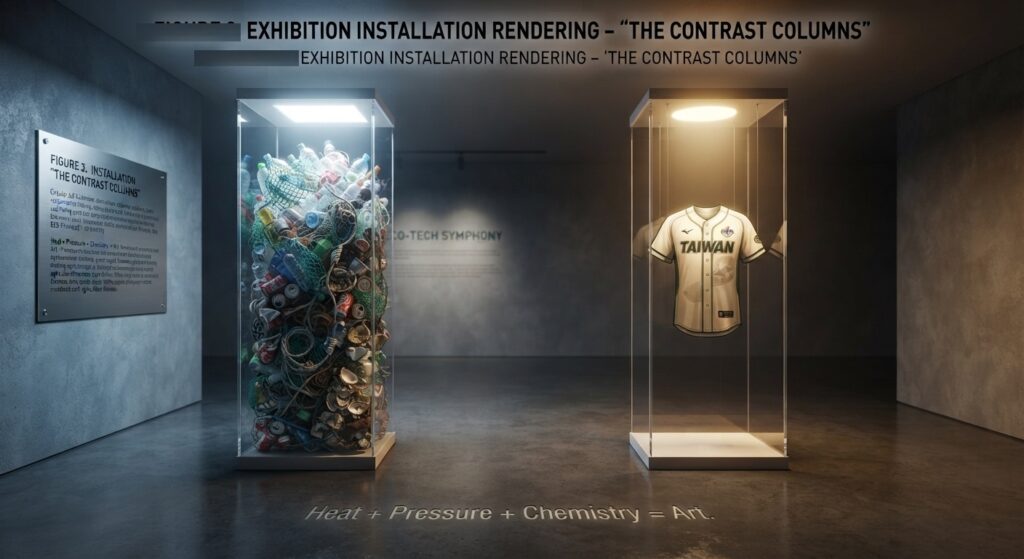
Figure 3. Exhibition Installation Rendering – “The Contrast Columns”
A digital rendering of the gallery’s entrance. The left column (2.5m tall) is filled with raw, tangled waste materials lit with harsh, cool white light. The right column (2.5m tall) features a single jersey floating in a warm, golden spotlight, suspended by nearly invisible wires. The floor between them features the engraved text: “Heat + Pressure + Chemistry = Art.”
5. Art & SAT Education
6. Game Zone
Activity: “The Polymer Puzzle – Spin Your Own Jersey”
In this interactive zone, visitors become “Textile Alchemists.”
- The Spinning Wheel: After sorting, visitors spin a physical wheel that determines the “function” of their jersey (e.g., “Cooling,” “Odor-Blocking,” or “Ultra-Durable”). The machine generates a unique, digital, AI-crafted jersey pattern based on their combination.
- The Dyeing Dip: Finally, visitors “dip” their digital jersey into a virtual indigo vat using a motion sensor. The longer they hold it, the deeper the blue—but a warning flashes: “Remember, eco-dyeing saves water!” They can then email their custom “Upcycled Art Jersey” to themselves as a digital postcard.
References
Taiwan Textile Research Institute (TTRI). (2021). Annual Report on Functional Recycling Technologies for Sports Textiles. Taipei: Ministry of Economic Affairs.
Chen, L. & Wang, H. (2022). “Chemical Depolymerization of Marine Nylon Waste for High-Tenacity Sportswear.” Journal of Sustainable Materials, 45(3), pp. 112-125.
Environmental Protection Administration, Taiwan (EPA). (2023). Ocean Waste-to-Resource Program: Fishing Net and PET Bottle Collection Statistics. Retrieved from epa.gov.tw.
Huang, S. (2023). “The Aesthetics of Upcycling: How Taiwanese Textiles Redefine Global Sportswear.” East Asian Design Review, 18(2), pp. 88-102.
Ministry of Economic Affairs, Taiwan. (2024). Vertical Integration in the Circular Textile Supply Chain. Industry White Paper No. 07-Textile.