

1️⃣ Exhibit Name
‘K’ Strikeout Sign
2️⃣ Collection & Image
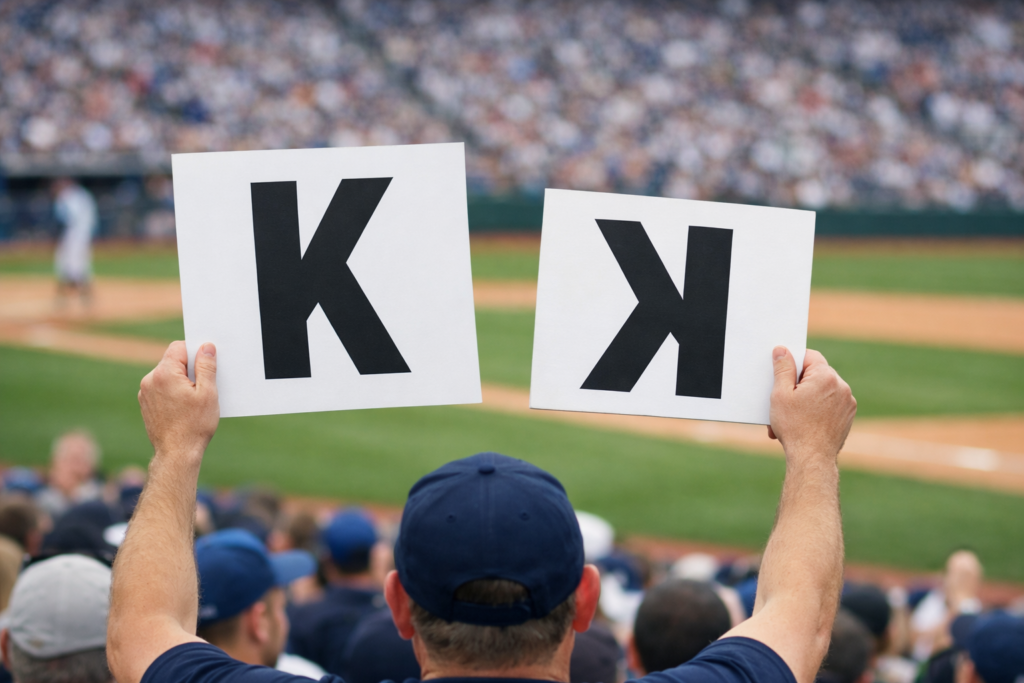
Figure 1. ‘K’ Strikeout Sign – “K” Strikeout Sign
White card with a black “K”. A backwards “K” (ꓘ) indicates a called third strike (looking).
3️⃣ Gallery Location
Fan Culture Wing › Signs Hall › United States
4️⃣ Exhibit Background
Baseball statistician Henry Chadwick, when designing the first standard scoring system, had already used the letter “S” for sacrifice. He needed another concise code for the strikeout. Scanning newspaper terminology, he found that journalists often described a strikeout as “struck three times.” Chadwick took the last letter of “struck” – “K” – to record the strikeout, first using it in the New York Clipper scoreboxes in the early 1860s. By 1888, he formally explained: “K is the last letter of ‘struck’ and easier to remember than S.”
The rule of the strikeout evolved over time. In 1858, the league formally introduced the rule for a “called strike” (looking), making the “looking” strikeout an official record. To distinguish the two types, scorers adopted the convention of “K” for a swinging strikeout, and a backwards “K” (ꓘ) for a called third strike (looking).
Whether viewed through history or modern analytics, “K” is more than just a letter. It symbolizes a pitcher’s dominance over the batter and marks the strategic shift from “putting the ball in play” to pursuing high strikeout rates. From Dwight Gooden’s nickname “Dr. K” to today’s “strikeout epidemic,” this symbol remains one of the most powerful letters in baseball discourse.
5️⃣ Period & Location
- Period: 1860s (origin as scoring symbol) – present
- Location: Professional and amateur ballparks across the United States
6️⃣ Material & Dimensions
- Material: White cardstock, cardboard, plastic signboard, cloth banner
- Common size: Approx. 8″ × 8″ to 20″ × 20″ (20 × 20 cm to 50 × 50 cm)

Figure 2. “K” Strikeout Sign (pop‑art style)
7️⃣ Narrative Story
📜 The Father of Baseball Statistics and His “Letter Dilemma”
In 1856, Henry Chadwick, a British cricket enthusiast, saw his first baseball game in New York and fell in love with the sport. He transplanted cricket’s statistical methods to baseball, invented the “box score,” and created foundational metrics such as batting average and earned run average. Yet when designing scoring symbols, he faced a problem: which letter should represent the strikeout? “S” was already taken for sacrifice. Noticing that contemporary newspapers often used “struck three times” to describe a strikeout, he took the last letter of “struck” – “K”. By the early 1860s, Chadwick’s scoreboxes in the New York Clipper began using “K” for strikeout, and the symbol quickly spread nationwide, remaining in use ever since.
🔄 “K” vs. “ꓘ”: A Visible Difference
Baseball scoring is remarkably nuanced: if a batter swings and misses for the third strike, the scorer writes a “K”; if the batter watches a called third strike (looking), the scorer writes a backwards “K” (ꓘ). This tiny distinction becomes a visible narrative for fans. From the scorecard, you can tell whether the pitcher overpowered the batter with a swing‑and‑miss or painted the corner for a called strike. In the stands, fans pick up on this detail: when a batter is called out on strikes, sharp‑eyed spectators raise backwards “K” signs, echoing the scorekeeper’s notation.
🎭 The “K‑Board Carnival”
In the mid‑1980s, a Mets fan named Dennis Scalzitti had an idea. He hung a hand‑painted “K” board on the left‑field railing at Shea Stadium. The simple gesture spread like wildfire. Whenever Dwight “Dr. K” Gooden struck out another batter, white “K” boards multiplied across the bleachers. The trend swept the nation: the San Francisco Giants created “K‑Ville,” a section where a dedicated crew flips “K” boards after every Giants strikeout, with 18 seats simultaneously raising “K” banners. In 2017, the Washington Nationals launched an official cheering section called “K Street,” where fans receive “K” T‑shirts and custom “K” cards. Statistician Nicholas T. has called this behavior a “data‑driven ritual” – fans synchronizing with the pitcher’s real‑time strikeout total, turning the scoreboard into a participatory spectacle. These rituals transform dry numbers into a visual carnival, making the stands the last mile of pressure for any batter.
🤔 Thank about It
- Why do you think fans turned a simple scoring letter into a stadium ritual?
- What does the difference between “K” and “ꓘ” tell us about how fans pay attention to the details of the game?
- How does holding up a “K” sign change the relationship between the fans and the pitcher?
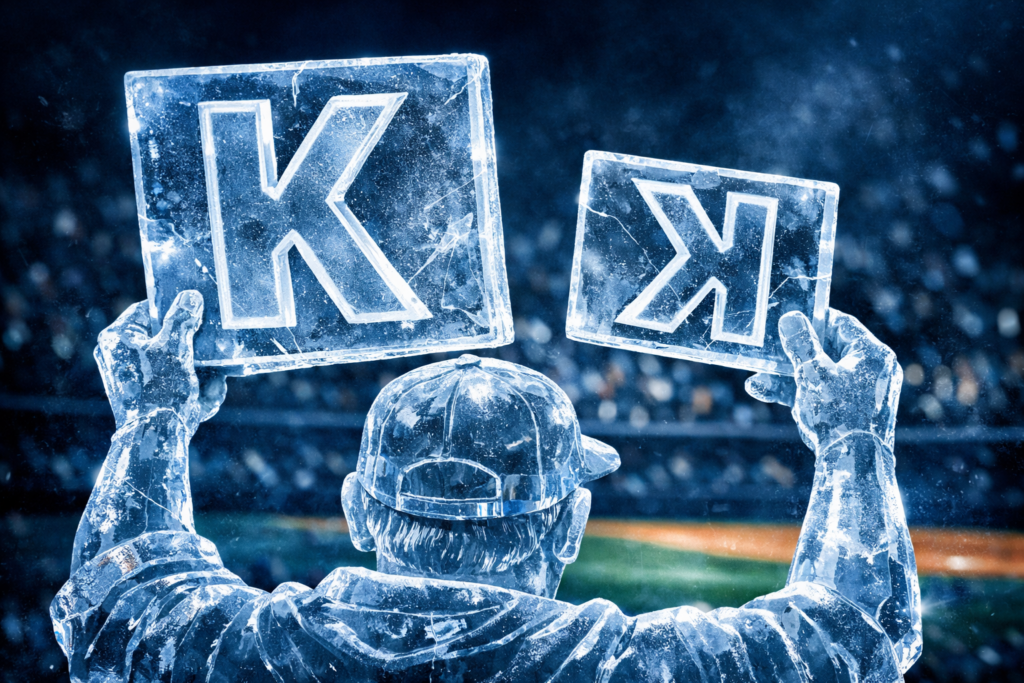
Figure 3. Ice Sculpture of “K” Strikeout Sign
8️⃣ Current Status & Applications
- Status: The “K” and “ꓘ” symbols remain fully preserved in MLB and global baseball scoring systems.
- Applications: Digital extensions such as interactive scorecards, historical scoring quizzes, and live strikeout counters.
- Suggested companion exhibits: Display alongside the “K‑Ville/K Street” phenomenon and the art of pitching dominance.
9️⃣ Significance & Educational Value
- Significance: A single letter “K” encapsulates the history of baseball scoring, the drama of pitcher‑batter confrontations, and the evolution of fan‑participated data rituals.
- Educational value: Helps visitors understand the origins of scoring symbols and statistics, revealing baseball as a sport interwoven with history, data, and collective memory.
🔟 References
- Britannica, The Editors of Encyclopaedia. Why Does “K” Stand for a Strikeout in Baseball?. Encyclopaedia Britannica, Inc., 13 Jun. 2025.
- MLB.com. Strikeout (SO, K). MLB Advanced Media.
- Glossary of baseball (K). Wikipedia.
- K Baseball Dictionary. Baseball Almanac.
- Why does a “K” represent a strike out in baseball? 11Alive.com, 4 Oct. 2019.
- Allen, Scott. ‘Like a playoff atmosphere’: Nats’ K Street section courts crazed fans. The Washington Post, 13 Jul. 2017.
- Meet the Giants fan who hangs the K’s. SFGate, 7 Aug. 2013.
- The ‘K’ Man: Taking the El Paso baseball experience to a new level. KVIA, 19 Jun. 2023.
- Strikeout looking. Wikipedia.
- ESPN.com. How the ‘K’ became the most destructive letter in Major League Baseball. 19 May 2021.
- Henry Chadwick (writer). Wikipedia.
- Why Does Baseball Use K For Strikeout? The Secret Meaning Behind The Strikeout Symbol. Owenthrives, 7 May 2024.
- The Role of ‘K’ in Modern Baseball. Uplaay.com.