
Country: Japan
Art Subject: Kanji Calligraphy – The Spirit of the Brush on the Face
Gallery Location: Fan Culture Wing / Face Paint Hall / Japan Face Paint Gallery
1. Story & Evolution
Preserve the past. Exhibit the present. Create the future of baseball art.
The tradition of painting kanji characters on the face is a profound expression of Japanese baseball fandom, fusing the ancient discipline of Shodo (Japanese calligraphy) with the modern passion of sports cheering. Unlike the bold checkerboards of American superfans, Japanese kanji face paint emphasizes meaning, precision, and spiritual connection —each character is a deliberate declaration of intent, a visible prayer for victory, and a testament to the deep cultural roots that distinguish Japanese baseball culture.
Shodo is not merely writing; it is a spiritual discipline that cultivates concentration and self-expression. By painting a single, powerful character on their cheeks or foreheads, fans transform themselves from spectators into living calligraphy, carrying the team’s spirit and their own hopes directly on their skin.
This table traces the evolution of kanji calligraphy in Japanese baseball face paint, from its origins in ancient spiritual practice to its modern role in fan expression and its potential future in digital and interactive art.
Table 1. The Evolution of Kanji Calligraphy Face Paint: Past, Present, and Future
| Period | Development | Cultural Influence | Key Features |
|---|---|---|---|
| PAST – Ancient Era | Kanji calligraphy (Shodo) develops as a spiritual and artistic practice. | Shodo emphasizes spiritual cultivation, balance, and the power of characters. | Brush and ink; spiritual meaning; balance and harmony |
| PAST – Edo Period (1603–1868) | Kabuki actors paint bold characters on their faces for dramatic effect. | Theatrical face painting influences later fan expression. | Bold characters; dramatic effect; theatrical tradition |
| PAST – Meiji Era (1868–1912) | Baseball is introduced to Japan (1872); early fans adopt team colors. | American baseball meets Japanese aesthetic sensibilities. | Simple color application; early team loyalty |
| PAST – Taishō Era (1912–1926) | First organized cheering sections; simple team colors painted on cheeks. | Birth of Japanese organized cheering culture. | Team colors; organized groups; collective identity |
| PRESENT | Fans paint meaningful kanji characters on cheeks and foreheads during games. | Fusion of Shodo calligraphic tradition and modern baseball fandom. | Precision application; meaningful characters; seasonal motifs; group coordination |
| PRESENT | Players and fans embrace kanji as personal expression (e.g., pitcher Espinoza tattoos “感謝” – “gratitude”). | Kanji becomes a bridge between players and fans, expressing shared values. | Personal connection; player-fan bond; shared meaning |
| PRESENT | Coordinated group designs – sections of fans match characters (e.g., “闘魂” – fighting spirit). | Reinforces collective identity and group harmony (wa). | Matching characters; visual rhythm; collective artwork |
| FUTURE | Digital calligraphy – AR-enhanced characters that animate through mobile phones. | Blends traditional calligraphy with modern technology. | Animated characters; AR integration; digital brushes |
| FUTURE | AI-generated kanji – AI suggests meaningful characters based on fan preferences. | Personalizes the experience; connects fans with their emotional state. | Personalization; emotional connection; AI assistance |
| FUTURE | Interactive characters – QR codes or AR triggers embedded in the paint. | Transforms passive face paint into interactive experiences. | QR codes; interactive content; fan engagement |
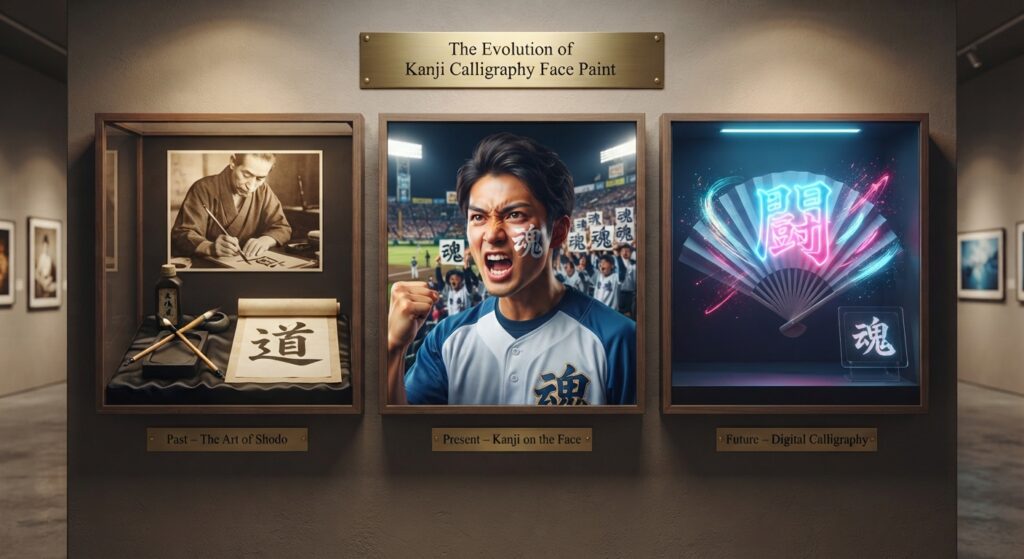
Figure 1. The Evolution of Kanji Calligraphy Face Paint
A museum timeline display showing the evolution of kanji calligraphy in Japanese baseball face paint. Left: a traditional calligraphy brush and ink stone representing the past. Center: a modern fan with the kanji “魂” (spirit) painted on their cheek, surrounded by an organized cheering section. Right: a futuristic rendering of a fan with an AR-animated kanji character glowing in neon light.
2. International Comparison
While other baseball cultures use face paint for team logos or national symbols, the Japanese tradition of painting kanji characters stands apart due to its deep linguistic, spiritual, and aesthetic dimensions.
This table contrasts the meaning and artistic approach of face paint across Japan, the United States, Taiwan, and the Dominican Republic, highlighting the unique linguistic and spiritual depth of the Japanese kanji tradition.
Table 2. Comparative Analysis of Face Paint Meanings Across Baseball Cultures
| Aspect | Japan (Kanji) | United States | Taiwan | Dominican Republic |
|---|---|---|---|---|
| Core Design | Kanji characters (闘 – fight, 魂 – spirit, 勝 – victory), team colors | Team logos, player numbers, color stripes | Playful characters, emoji-style designs, glow-in-the-dark | Flag designs, religious symbols (crosses, “Dios”) |
| Artistic Style | Calligraphic, elegant, precise, minimalist | Bold, graphic, recognizable, dramatic | Whimsical, creative, digital-native | Expressive, colorful, passionate, patriotic |
| Cultural Meaning | Spiritual expression, collective harmony, linguistic depth | Individual loyalty, personal identity, superfan culture | Creative expression, digital-native culture, humor | National pride, spiritual devotion, family honor |
| Philosophical Core | “The character carries the spirit” – each stroke is deliberate | “The logo declares identity” – instant recognition | “The design expresses personality” – creative freedom | “The flag declares pride” – national devotion |
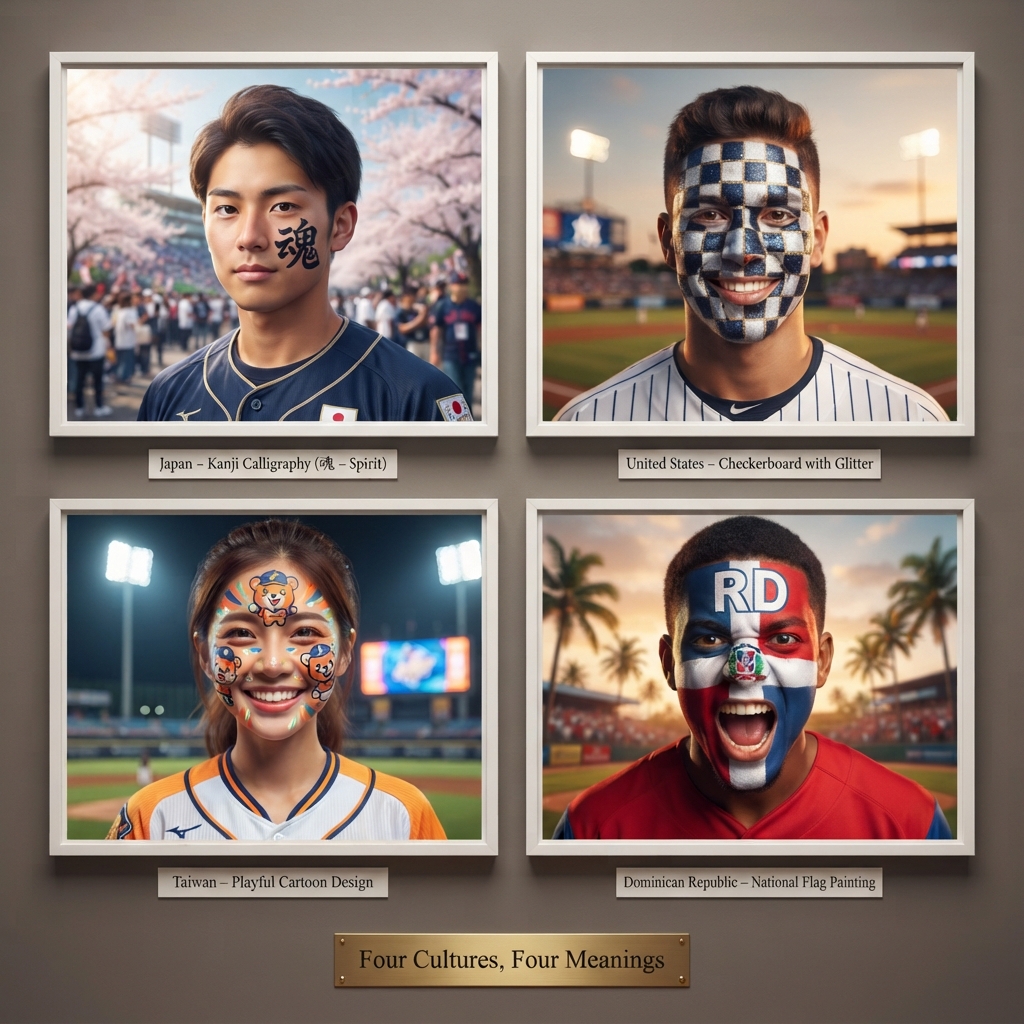
Figure 2. Four Cultures, Four Meanings
A grid collage of four close-up photographs showing face paint traditions from each culture: Japanese kanji calligraphy (魂 – “spirit”), American checkerboard with glitter, Taiwanese playful cartoon design, and Dominican national flag painting.
3. Comparing Baseball and Football
The tradition of painting kanji on faces is not unique to baseball; it is also seen among Japanese football (soccer) fans. Comparing the two reveals how the same practice can express different facets of Japanese culture.
This table contrasts the use of kanji face paint in Japanese baseball and football, highlighting similarities and differences in meaning, context, and cultural expression.
Table 3. Comparative Analysis of Kanji Face Paint in Baseball and Football
| Aspect | Baseball (NPB) | Football (J-League) |
|---|---|---|
| Core Kanji | 闘 (fight), 魂 (spirit), 勝 (victory), 絆 (bond) | 闘 (fight), 魂 (spirit), 勝 (victory), 和 (harmony) |
| Cultural Meaning | Personal and team spirit; connection to the game’s history | National pride; team loyalty; collective identity |
| Group Coordination | Sections of fans coordinate matching characters | Ultra groups coordinate full-face designs and banners |
| Philosophical Core | “The character carries the spirit of the team” | “The character carries the spirit of the nation” |
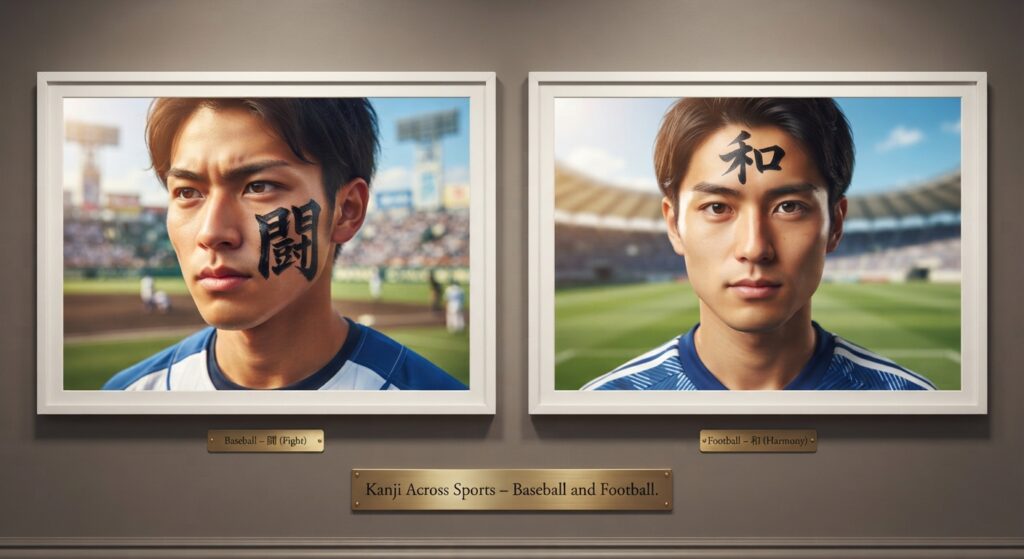
Figure 3. Kanji Across Sports – Baseball and Football
A side-by-side comparison of Japanese baseball and football fans wearing kanji face paint. The baseball fan has “闘” (fight) on their cheek, while the football fan has “和” (harmony) on their forehead, demonstrating the shared cultural practice across different sports.
4. Unique Artistic Analysis
The artistry of kanji face paint lies in its ability to condense profound meaning into a single, powerful visual form, transforming the human face into a canvas of spiritual declaration.
I. The Calligraphic Aesthetic
- Brush Control and Precision: The application of paint on the face mirrors the discipline of Shodo. Each stroke must be executed with control and intentionality, reflecting the fan’s respect for the character’s meaning.
- Character Meaning: Kanji are not decorative; they carry deep emotional weight. A fan wearing “魂” (spirit) is declaring their soul is invested in the team, while “闘” (fight) is a vow to never give up.
- Negative Space and Balance: Like traditional calligraphy, the space around the character is as important as the character itself, creating a sense of harmony.
II. The Power of a Single Character
- Concentration of Meaning: A single kanji can encapsulate an entire philosophy (e.g., “魂” embodies fighting spirit, soul, and passion).
- Visual Impact: A bold, single character on the forehead or cheek creates a dramatic, commanding presence.
- Efficiency of Expression: A single character communicates more than a slogan or logo could.
III. The Collective Canvas
- Group Coordination: When sections of fans coordinate matching characters, the individual faces become part of a larger collective artwork.
- Visual Rhythm: Repetition of characters across a section creates a powerful visual rhythm, reinforcing the group’s shared intent.
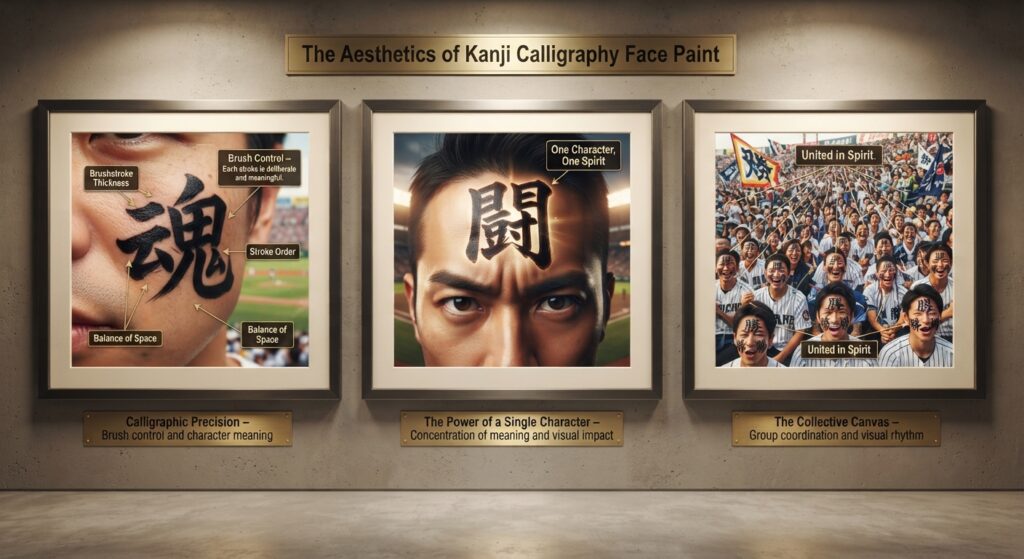
Figure 4. The Aesthetics of Kanji Calligraphy Face Paint
A three-panel educational display illustrating the aesthetic principles of kanji face paint: Calligraphic Precision (brush control and character meaning), The Power of a Single Character (concentration of meaning and visual impact), and The Collective Canvas (group coordination and visual rhythm).
5. Artistic Transformation and Future Creation
Kanji calligraphy face paint has inspired artists across multiple media and points toward exciting future possibilities for spiritual expression.
Artistic Interpretation I: Wax Sculpture – “The Spirit Carved in Wax”
Concept: A life-sized, hyper-realistic wax sculpture of a baseball fan, with a kanji character physically carved, molded, or embedded into the surface of the face. The character is not painted on – it is sculpted into the wax itself, creating a permanent, three-dimensional fusion of the fan’s identity and the character’s meaning. The sculpture captures the fan’s expression – eyes closed in prayer, face raised, or looking forward with quiet determination – making the character an inseparable part of their being.
Visual Highlight: The wax figure is so realistic that visitors may mistake it for a real person. The kanji character – “魂” (spirit) or “闘” (fight) – appears to emerge from the skin itself, as if the character has been carved into the very soul of the fan. The wax captures every detail: the texture of the skin, the subtle wrinkles, the shine of the eyes, and the depth of the carved character. Warm lighting creates a lifelike, almost breathing presence.
Future Vision: A series of life-sized wax sculptures of fans from different eras and backgrounds, each carved with the kanji that defines their spirit. These sculptures could be displayed in stadium concourses or museums, creating a permanent gallery of “Spirits of the Game” – a testament to the enduring connection between fans, their teams, and the characters they wear on their faces.
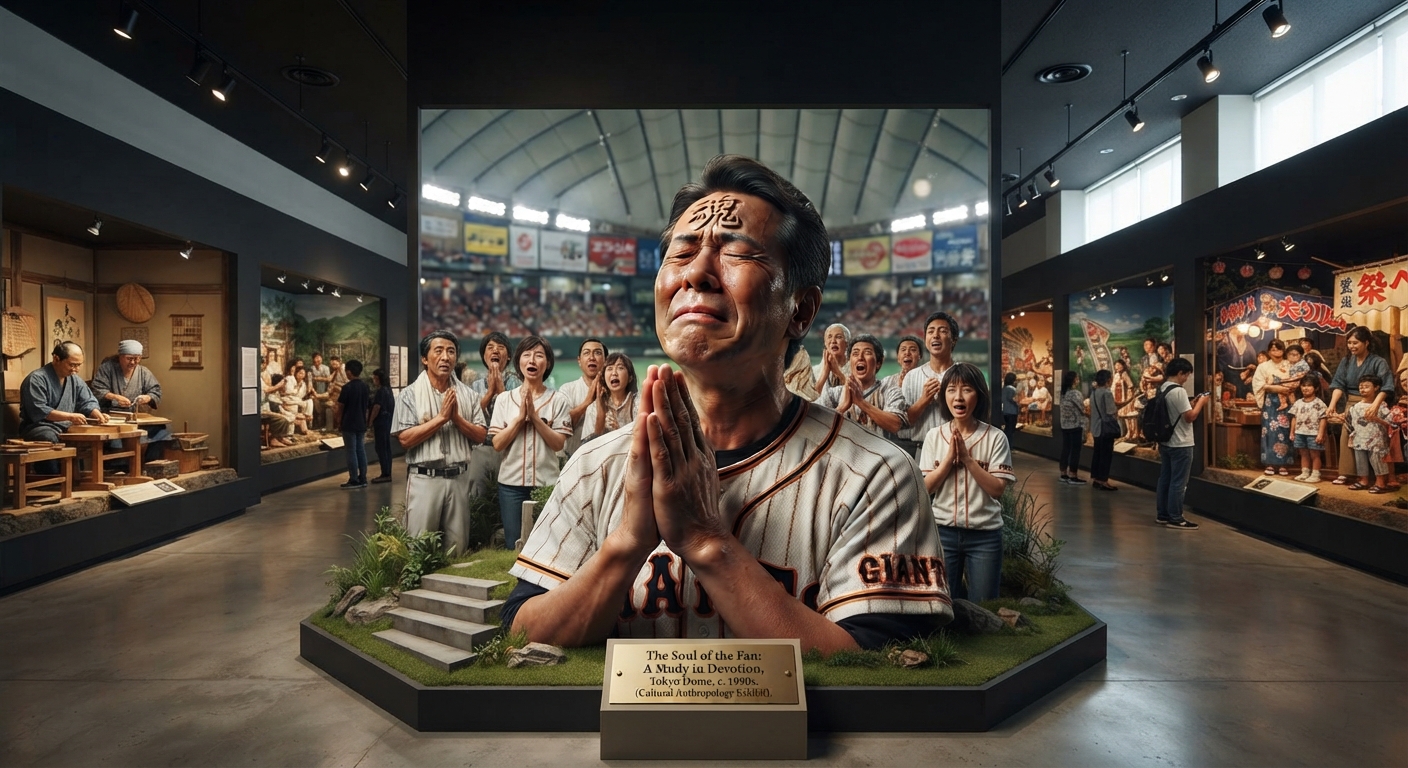
Figure 5. “The Spirit Carved in Wax” – Wax Sculpture
Artistic Interpretation II: Sculpture – “The Luminous Face”
Concept: A series of sculptural works featuring life-sized busts of fans with traditional kanji face paint, enhanced with futuristic LED accessories – glowing glasses, illuminated hats, and light-up scarves. The combination of ancient calligraphy and modern LED technology creates a stunning visual contrast, showing how the tradition of kanji face paint can evolve while preserving its spiritual core.
Visual Highlight: The fan’s face features a beautifully painted kanji character (魂 – spirit, 闘 – fight, or 勝 – victory) in traditional black brushstrokes. But the face is surrounded by glowing LED elements: a sleek visor or glasses with color-changing lights, a baseball cap with an illuminated brim, and a scarf that pulses with soft, rhythmic light. The LED lights can synchronize with the stadium atmosphere, changing colors to match the team’s colors or the fan’s emotional state.
Future Vision: Fans wear LED accessories that complement their face paint at night games, turning the stadium into a living light show. The lights synchronize with the game’s rhythm – pulsing with each pitch, glowing brighter with each run scored, and creating a unified visual display across entire sections. The combination of traditional kanji and futuristic LED technology creates a new art form – “Luminous Calligraphy.”
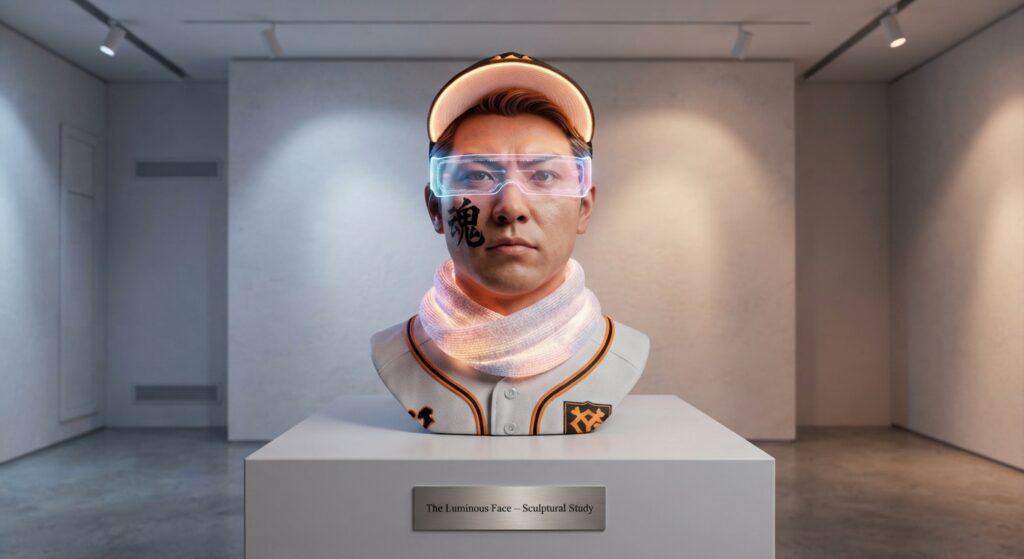
Figure 6. “The Luminous Face” – LED-Enhanced Face Paint
6. Art & SAT Education
7. Game Zone
Activity: “Kanji Calligraphy – Paint Your Spirit”
In this interactive zone, visitors become digital calligraphers and design their own kanji face paint.
- Character Selection: Visitors choose a meaningful kanji character from a curated selection:
- 闘 (Tō – “Fight”) – The spirit of never giving up
- 魂 (Tamashī – “Spirit”) – Pouring your soul into the team
- 勝 (Shō – “Victory”) – The prayer for success
- 絆 (Kizuna – “Bond”) – The connection between players and fans
- 心 (Kokoro – “Heart”) – Playing and cheering with all your heart
- 勇 (Yū – “Courage”) – The bravery to face any challenge
- Team Colors: Visitors select team colors to complement their character.
- Style Selection: Visitors choose from:
- Traditional: Classic black ink on skin
- Modern: Team colors integrated with the character
- Seasonal: Character with cherry blossom or autumn leaf accents
- Glow: UV-responsive character for night games
- Brush Stroke Simulation: Visitors “paint” their character using a digital brush on a touchscreen, experiencing the discipline of calligraphy.
- Face Preview: The design is rendered on a digital face preview.
- Share & Download: Visitors can:
- Download their design as a digital souvenir
Bonus Challenge: “Calligraphy Master” – A timed challenge where visitors must paint a kanji character with correct stroke order using a digital brush.
References
Japanese Calligraphy Education Association. (2020). Shodo: The Art of Japanese Calligraphy. Tokyo: JCEA Publications.
NPB.jp. (2024). NPB Fan Culture and Cheering Traditions. Nippon Professional Baseball.
Suzuki, H. (2019). “The Calligraphy of Fandom: Kanji Characters in Japanese Baseball Face Paint.” Journal of Japanese Sports Culture, 15(2), pp. 45-62.
Tanaka, M. (2022). Organized Cheering in Japanese Baseball: A Cultural History. Tokyo: University of Tokyo Press.
Yamamoto, K. (2021). “Face Paint and Fan Identity: A Cross-Cultural Comparison.” International Journal of Sports Studies, 8(3), pp. 112-128.
Fujimoto, R. (2023). “Digital Calligraphy: The Future of Japanese Fan Expression.” Digital Culture Review, 12(4), pp. 78-94.
Pacific League. (2025). “Espinoza Experiences Calligraphy with Fans.” Pacific League News.
Kanji Park. (2024). “The Meaning of 闘 (Fight).” Kanji Park Dictionary.