1️⃣ Exhibit Name
“Sā! Ikō!” (さあ!行こう!) – The Rallying Call
2️⃣ Gallery Location
Fan Culture Wing › Chants & Cheers Hall › Japan Chants Gallery
3️⃣ Collection & Image
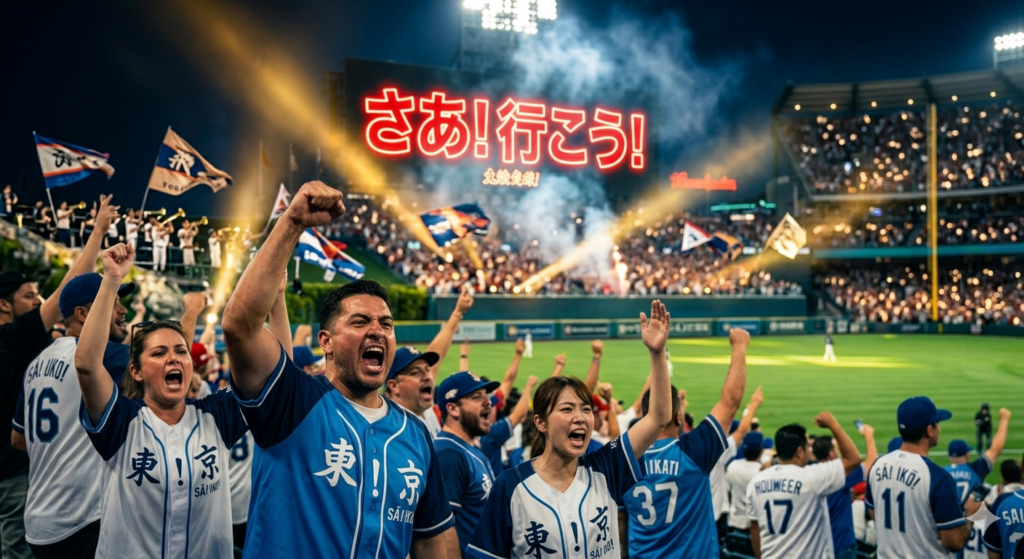
Figure 1. “The Unified Surge”
A stadium crowd rises in perfect synchronization, clapping and chanting “Sā! Ikō!” to propel their team forward during an offensive rally.

Figure 2. “The Call to Advance” – Japanese Painting (日本画)
A traditional Nihonga painting capturing the rhythmic momentum of the “Sā! Ikō!” chant with mineral pigments and gold leaf.
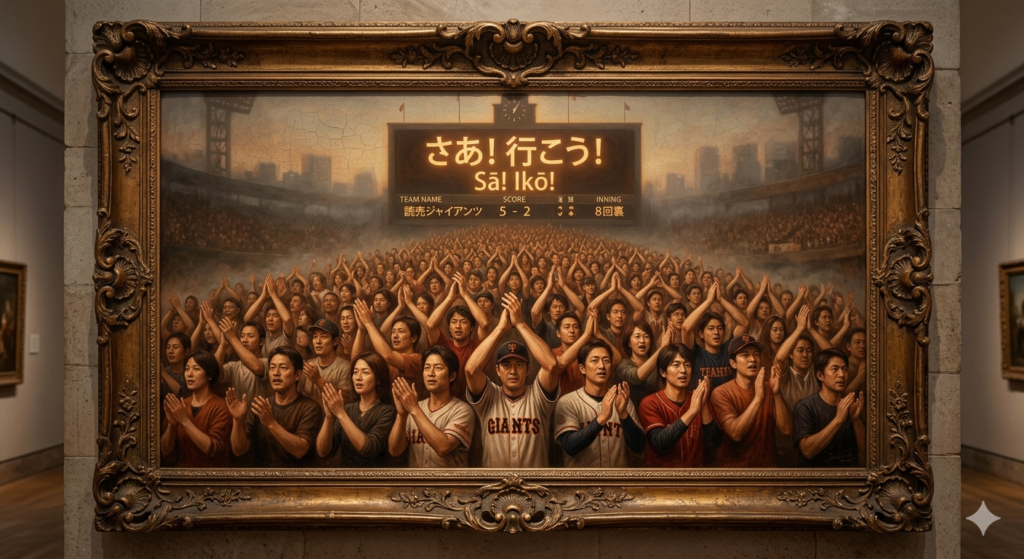
Figure 3. “The Momentum of the Crowd” – Oil Painting in the Style of Leonardo da Vinci
An oil painting inspired by Leonardo da Vinci’s Renaissance techniques, capturing the rhythmic momentum and collective will of the “Sā! Ikō!” chant.
4️⃣ Exhibit Background
The “Sā! Ikō!” (さあ!行こう!) chant is one of the most recognizable and unifying sounds in Japanese baseball — a rhythmic, two-part call that transforms thousands of individual spectators into a single, forward-moving wave of energy. Translating roughly to “Come on! Let’s go!” or “Now, let’s advance!”, it is the sound of a crowd willing its team forward during offensive rallies.
Unlike the sudden, explosive burst of “Charge!” or the defensive pressure of “DE-FENSE!”, “Sā! Ikō!” is a momentum-building chant — a steady, driving rhythm that builds over time, inning after inning. It is used exclusively when the home team is at bat, particularly during scoring opportunities. The chant is led by the Ōendan (応援団), or “cheering squad” — organized groups of passionate fans who direct the crowd’s energy with flags, trumpets, and megaphones.
The phrase itself carries a sense of urgency and forward motion. “Sā” (さあ) is an interjection meaning “now” or “come on,” while “Ikō” (行こう) means “let’s go.” Together, they form a call to action — a command to advance, to push forward, to seize the moment.
5️⃣ Period & Location
- Period: 1950s – present (originated in Japanese high school and college baseball; adopted by professional teams in the 1950s)
- Location: Every Japanese professional baseball stadium (NPB), high school baseball venues (Koshien), and amateur fields across Japan
6️⃣ The Chant’s Structure
- Rhythmic Pattern: A steady, driving two-part call — “Sā!” followed by “Ikō!” — typically accompanied by synchronized clapping
- The Call: The crowd chants “Sā!” on the first beat, often led by the ōendan
- The Clap: A single, sharp clap on the second beat
- The Response: The crowd chants “Ikō!” on the third beat
- Full Pattern: “Sā!” (clap) — “Ikō!” (clap) — repeated continuously
- Variations:
- Sometimes chanted as “Sā! Ikō!” with a longer pause between syllables for dramatic effect
- The tempo can accelerate as the rally builds momentum
- Often accompanied by the waving of large team flags (応援旗)
- May be paired with brass band music or taiko drumming
- In some ballparks, the chant is preceded by a trumpet fanfare played by the ōendan
7️⃣ Narrative Story
The Birth of a Stadium Staple
The “Sā! Ikō!” chant has its roots in Japanese high school and college baseball, where organized cheering has been a tradition for over a century. The ōendan system — with its brass bands, flags, and megaphone-wielding leaders — was formalized in the 1920s and became an integral part of the Japanese baseball experience.
The chant itself emerged as a natural expression of the “one for all” spirit that defines Japanese team sports. Unlike American chants, which often focus on individual players or defensive intimidation, Japanese chants emphasize collective forward motion — the idea that the entire team, supported by the entire crowd, is advancing together toward victory.
The Ōendan Tradition
The ōendan are the heart of Japanese baseball cheering. These organized groups — often wearing matching happi coats and headbands — position themselves in the outfield stands and lead the crowd through a repertoire of chants, songs, and coordinated movements.
The “Sā! Ikō!” chant is one of the most versatile tools in the ōendan’s arsenal. It can be deployed in any offensive situation — from the first inning to the ninth — and its simple, repetitive structure makes it easy for even casual fans to join in. The ōendan leader raises a flag or megaphone to signal the start, and the crowd follows in perfect synchronization.
From High School to the Pros
By the 1950s, as Japanese professional baseball (NPB) grew in popularity, the “Sā! Ikō!” chant made the leap from schoolyards to the big leagues. Teams like the Yomiuri Giants and Hanshin Tigers adopted the chant as part of their official cheering repertoires.
Today, the chant is heard at every NPB game — from the season opener to the Japan Series. It has also become a staple of the Samurai Japan national team’s cheering repertoire, used during international competitions like the World Baseball Classic.
The Globalization of “Sā! Ikō!”
The chant has even crossed borders. During the 2023 World Baseball Classic, fans around the world heard the “Sā! Ikō!” chant echoing through stadiums as Team Japan marched to victory. Players themselves have embraced the phrase — most notably Lars Nootbaar, who shouted “Sā! Ikō!” during team huddles, much to the delight of Japanese fans.
Think About It
- Why do you think the “Sā! Ikō!” chant uses a steady, driving rhythm rather than a sudden, explosive one? How does that tempo affect the team at bat?
- How does the collective, forward-moving nature of “Sā! Ikō!” differ from the defensive pressure of “DE-FENSE!”? What different emotions do they evoke?
- The chant is led by the ōendan — organized cheering squads. How does this structured leadership differ from the more spontaneous nature of American chants like “Charge!”?
- Why do you think “Sā! Ikō!” has become one of the most universal sports chants in Japan, transcending teams, leagues, and generations?
8️⃣ Current Status & Applications
- Status: The “Sā! Ikō!” chant is ubiquitous — heard at every NPB game, from Opening Day to the Japan Series, and at all levels of Japanese baseball
- Trigger: Initiated by the ōendan leader, who raises a flag or megaphone to signal the start
- Timing: Typically chanted during offensive rallies — when the home team has runners on base, when the count is favorable, or when the team needs a momentum shift
- Variations:
- Sometimes chanted with two claps after each call: “Sā! Ikō! clap clap“
- The tempo can accelerate as the rally builds
- Often accompanied by the waving of team flags and the playing of brass instruments
- In some ballparks, the chant is paired with taiko drumming
- May be preceded by a trumpet fanfare or a call-and-response from the ōendan
- Suggested companion exhibits: Display alongside “Let’s go [Team]!” to show the contrast between American and Japanese approaches to rhythmic chanting. The “Global Voices” map can show how different cultures express offensive momentum.
9️⃣ Significance & Educational Value
- Significance: The “Sā! Ikō!” chant is the purest expression of collective forward momentum in Japanese baseball. Unlike “Charge!” which is a sudden burst of hope, or “DE-FENSE!” which is a slow building of pressure, “Sā! Ikō!” is a steady, driving rhythm — a continuous reminder that the team and the crowd are advancing together toward victory. It transforms thousands of individuals into a single, unstoppable wave of energy.
- Educational Value: Encourages visitors to consider how rhythm, leadership, and collective action shape the baseball experience in different cultures. The chant demonstrates:
- How organized leadership (the ōendan) can unify a massive crowd into a single voice
- The power of sustained, rhythmic chanting to build momentum over time
- How cultural values (collectivism, forward motion, unity) are reflected in sporting traditions
- The psychological impact of crowd noise on offensive performance — how a chanting crowd can genuinely energize a team at bat
- Connection to “Charge!” and “DE-FENSE!”: While “Charge!” is a lightning strike of collective energy and “DE-FENSE!” is a slow, rhythmic pressure, “Sā! Ikō!” is a steady, driving momentum — a continuous wave of forward motion. Together, these three chants represent three distinct modes of fan expression: the sudden jolt of a rallying cry (Charge!), the sustained pressure of a defensive stand (DE-FENSE!), and the relentless forward momentum of an offensive surge (Sā! Ikō!).
References
- MLB.com – “Japan’s iconic cheer squads? You can thank college football”
- Wikipedia – “Ōendan”
- Samurai Japan Official Site – 侍ジャパン応援曲
- Yahoo! Chiebukuro – 野球部っていつから声出し、掛け声の締めは「さあ行こう!」なんですか?
- The Digest – ヌートバーが日本語で絶叫した”円陣声がけ”
- Asahi Shimbun – 阪神新人・佐藤の応援歌もう出来た