

Apparel Hall · United States
From the Ballpark to Everyday America
The baseball cap has become one of the most recognizable symbols of American baseball. Fans wear team caps both inside and outside the ballpark as expressions of loyalty, identity, community, and personal style.
But the team baseball cap did not begin as a fashion accessory. It developed gradually alongside organized baseball, professional team uniforms, specialized cap manufacturing, and the growth of fan culture.
Its story is therefore a story of transformation:
Player Headwear → Team Identity → Professional Cap → Fan Apparel → American Fashion
1. The Evolution of the American Baseball Cap
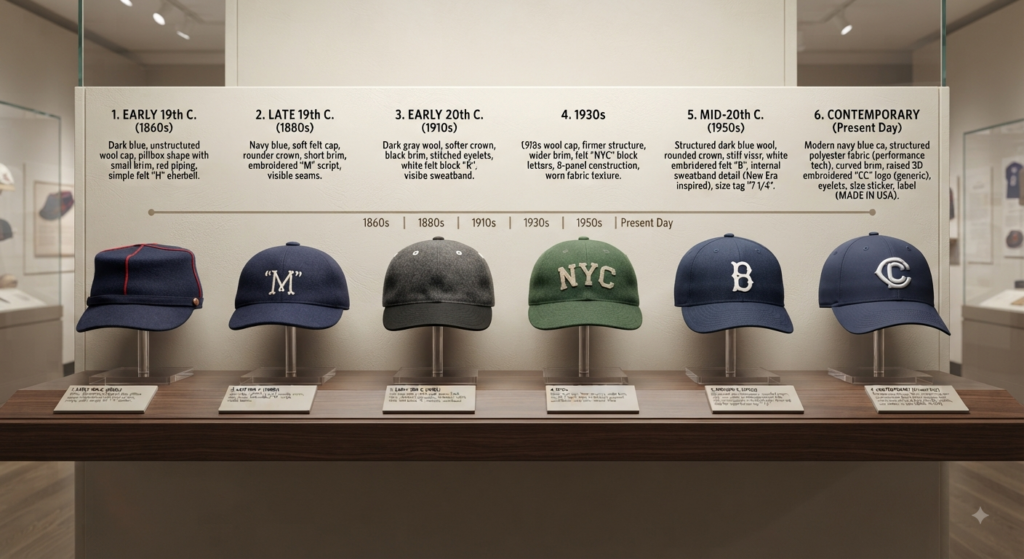
Figure 1. Evolution of the American Baseball Cap, 19th Century–Present
A chronological museum-style display showing representative stages in the evolution of American baseball headwear, from early organized baseball and 19th-century team headwear through the development of the modern professional baseball cap, the New Era 59FIFTY, and contemporary team caps.
2. Early Baseball and the Development of Team Identity
Baseball developed from earlier bat-and-ball traditions and became increasingly organized in the United States during the mid-19th century. By the 1840s and 1850s, organized clubs were forming, and baseball rules and team structures were becoming more standardized. By the 1860s, baseball was widely described as America’s national pastime.
In 1869, the Cincinnati Red Stockings became the first openly professional baseball team, and in 1871 the first professional baseball league was established. As baseball became more organized and professional, team identity became increasingly important.
Uniforms and other visual elements helped distinguish one club from another.
The baseball cap eventually became one of the most recognizable parts of that visual identity.
Importantly, however, there is no single universally accepted date for the invention of the modern baseball cap. The cap evolved gradually as baseball uniforms, manufacturing, and professional team culture developed.
3. From Early Headwear to the Professional Baseball Cap
During the 19th century, baseball players wore a variety of headwear rather than one standardized cap design.
As professional baseball developed, uniforms became increasingly distinctive and standardized. The National Baseball Hall of Fame’s Taking the Field: The 19th Century exhibit documents the broader evolution of baseball equipment, uniforms, and material culture during this period.
By the early 20th century, the baseball cap had become an established part of the professional baseball uniform.
The cap served practical purposes, including shielding players’ eyes from sunlight, but it also served a cultural purpose:
It identified the player with a team.
A team emblem or letter could communicate a club’s identity at a glance.
4. From Player Uniform to Fan Culture
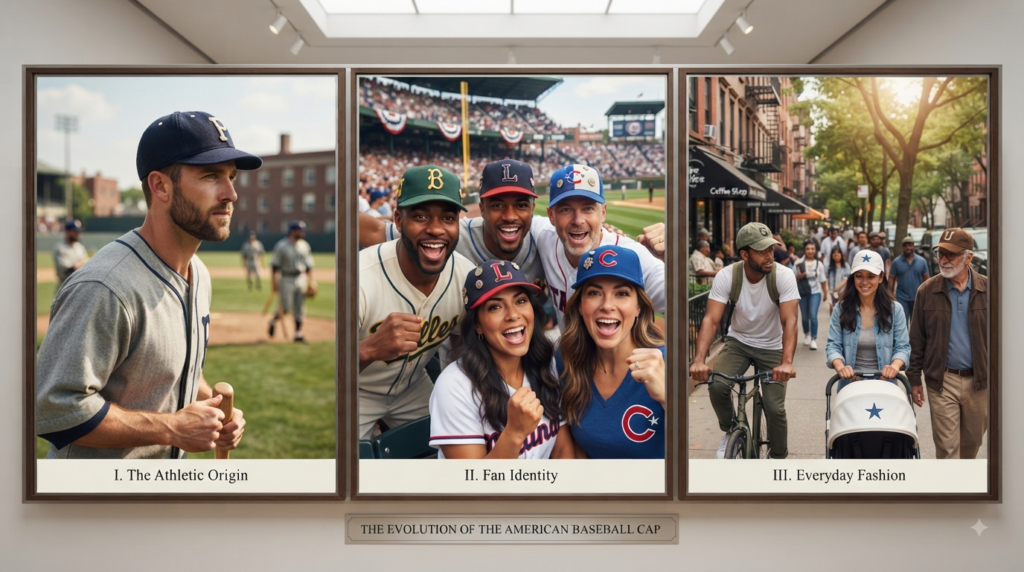
Figure 2. From the Ballpark to Everyday America
A museum-style visual comparison showing the baseball cap in three stages of American culture in figure 2: worn as professional player equipment, worn by fans at a baseball stadium, and worn as everyday fashion outside the ballpark.
5. The New Era and the Modern Professional Cap
A major chapter in the development of the modern baseball cap came from New Era Cap Company, founded in Buffalo, New York, in 1920 by Ehrhardt Koch.
New Era originally produced Gatsby-style caps. As professional baseball grew in popularity during the 1930s, the company entered the baseball-cap market. In 1934, New Era produced its first professional baseball cap for the Cleveland Indians.
The company expanded to additional professional teams during the following years. By 1950, its clients included teams such as the Cleveland Indians, Cincinnati Reds, Detroit Tigers, and Brooklyn Dodgers.
New Era also recognized something important:
Fans wanted to wear the same kind of caps as their favorite players.
The company therefore expanded its market beyond professional players to high school, Little League, amateur teams, and fans. The baseball cap was beginning to move from uniform → merchandise → personal identity.
6. The 59FIFTY: A Defining Modern Design
In 1954, Harold Koch, son of New Era founder Ehrhardt Koch, designed the fitted 59FIFTY cap.
The design became an important part of modern professional baseball headwear. New Era’s success eventually led to a closer relationship with Major League Baseball, and in 1993 New Era became MLB’s exclusive supplier of on-field caps.
The fitted cap helped establish a recognizable professional silhouette:
- Structured crown
- Visor
- Fitted sizing
- Team emblem
- Consistent professional appearance
The baseball cap had become more than an accessory.
It had become part of the visual architecture of professional baseball.
7. From Team Uniform to Fan Identity
As professional baseball grew, fans increasingly adopted team caps as a visible expression of loyalty.
A jersey can communicate a team identity, but a cap has a special advantage:
It is easy to wear almost anywhere.
Fans could wear a team cap:
- At the ballpark
- At school
- At work
- While traveling
- At family gatherings
- In everyday community life
The team emblem or letter became a small but powerful cultural sign.
A person could identify with a team without wearing a complete baseball uniform.
The cap therefore created a bridge between:
Player → Team → Fan → Community
8. When the Baseball Cap Became Fashion
For much of the 20th century, professional baseball caps were closely tied to team colors and traditional uniform design.
That began to change dramatically in the 1990s.
In 1996, filmmaker and New York native Spike Lee wanted a red Yankees cap to match a red Yankees jacket he planned to wear to the World Series. At that time, the Yankees cap was traditionally associated with its established team colors.
New Era produced the red cap after obtaining approval from Yankees owner George Steinbrenner.
Lee’s appearance attracted enormous attention.
The red Yankees cap demonstrated that a baseball cap could be more than a representation of a team:
It could also be a fashion statement.
The Baseball Hall of Fame identifies this moment as an important turning point in the expansion of baseball caps into fashion and streetwear.
Afterward, team caps increasingly appeared in different colors, materials, designs, collaborations, and limited editions.
9. Evolution Timeline
| Period | Development | Cultural Meaning |
|---|---|---|
| 1840s–1860s | Organized baseball expands in the United States | Baseball develops recognizable club and player identities |
| 1869 | Cincinnati Red Stockings become the first openly professional team | Professional baseball begins to take shape |
| 1871 | First professional baseball league established | Team organization and professional identity expand |
| Late 19th century | Baseball uniforms and team clothing evolve | Clothing increasingly identifies clubs and players |
| Early 20th century | Baseball caps become established professional headwear | Cap becomes part of baseball’s visual identity |
| 1920 | New Era founded in Buffalo | Specialized cap manufacturing begins a new chapter |
| 1934 | First New Era professional baseball cap, for Cleveland Indians | Modern professional cap production expands |
| 1954 | 59FIFTY designed by Harold Koch | Influential fitted professional cap established |
| Mid-20th century | Caps expand to amateur teams and fans | Baseball headwear becomes fan apparel |
| 1993 | New Era becomes MLB’s exclusive on-field cap supplier | Professional cap identity becomes standardized |
| 1996 | Spike Lee’s red Yankees cap gains attention | Team caps become increasingly connected with fashion |
| 2000s–present | Collaborations, alternate colors, streetwear, collectibles | Baseball cap becomes a broader cultural and fashion object |
The early development of organized baseball is documented by the Library of Congress, while the New Era milestones are documented by the National Baseball Hall of Fame and Museum.
10. Design & Materials
A traditional baseball cap consists of several basic elements:
- Crown — the main body of the cap
- Visor — protects the eyes from sunlight
- Sweatband — provides comfort and absorbs perspiration
- Team emblem or lettering — communicates team identity
- Sizing system — varies between fitted, adjustable, and stretch designs
Materials have evolved from traditional wool and textile constructions toward cotton blends, polyester, performance fabrics, and other modern materials.
Although construction has changed, the essential visual formula has remained remarkably recognizable:
Crown + Visor + Team Mark = Baseball Identity
11. Cultural Interpretation
The American baseball cap represents a remarkable cultural transformation:
Sports Equipment → Team Symbol → Fan Merchandise → Fashion
Its significance comes from its portability.
A baseball cap allows baseball identity to leave the stadium.
A fan does not have to wear a complete uniform.
A small letter, emblem, or color can communicate:
“This is my team.”
But the modern cap can communicate even more:
“This is part of who I am.”
The cap can represent a team, city, community, memory, fashion preference, or connection to baseball itself.
This makes the baseball cap an example of wearable cultural art.
12. Think About It
- Why did the baseball cap become easier to integrate into everyday American life than many other pieces of sports equipment?
- Why can a single letter or emblem communicate an entire team identity?
- When did baseball merchandise become fashion?
- How can a baseball cap represent both a team and a person’s individual identity?
- Can an everyday piece of clothing become a museum artifact?
13. Current Status & Museum Relevance
Today, team baseball caps exist in many forms:
- Professional on-field caps
- Fan replicas
- Fitted caps
- Adjustable caps
- Vintage reproductions
- Limited editions
- Collectibles
- Fashion collaborations
- Streetwear
The National Baseball Hall of Fame and Museum preserves historically significant baseball caps as artifacts, demonstrating that caps can document important players, events, and moments in baseball history. Its broader museum collection contains tens of thousands of preserved baseball artifacts.
The modern cap has therefore become both:
a baseball object and a cultural object.
14. Museum Significance
Historical Significance
The baseball cap reflects the development of organized and professional baseball in the United States and the evolution of team uniforms.
Cultural Significance
It demonstrates how baseball identity moved beyond the playing field and became part of everyday American life.
Fashion Significance
The baseball cap is a major example of sports apparel crossing into mainstream fashion and streetwear. The 1996 Spike Lee red Yankees cap illustrates this transition particularly well.
Artistic Significance
The combination of shape, color, lettering, emblem, material, and historical association transforms a simple cap into a form of wearable visual culture.
Educational Significance
The exhibit shows visitors that baseball history can be preserved not only through games, players, and records, but also through the ordinary objects people wear.
15. Key Idea
From the Ballpark to Everyday America
The baseball cap began as part of baseball’s evolving uniform.
It became a symbol of the team.
It became something fans could wear.
And eventually, it became part of American fashion.
A baseball cap does not simply show which team you watch.
It can show where you belong.
References
- National Baseball Hall of Fame and Museum. “Capping It Off.” Documents the development of New Era, the 1934 Cleveland Indians professional cap, the 1954 59FIFTY, the 1993 MLB agreement, and the 1996 Spike Lee red Yankees cap.
- Library of Congress. “Origins and Early Days — Baseball Americana.” Provides historical context for the development and organization of American baseball during the 19th century.
- Library of Congress. “Drawing the Color Line: 1860s to 1890s.” Documents the formalization of baseball teams and the development of professional baseball, including the 1869 Cincinnati Red Stockings and 1871 professional league.
- Library of Congress. “Baseball Beginnings.” Documents the development of organized baseball in the 1840s–1860s and its emergence as America’s national pastime.
- National Baseball Hall of Fame and Museum. “Taking the Field: The 19th Century.” Provides museum context for the evolution of baseball equipment, uniforms, and material culture.
- National Baseball Hall of Fame and Museum. Museum collection and exhibition materials documenting historically significant baseball artifacts and their cultural impact.