
Country: Japan
Baseball Art Object: Team Towel
Gallery Location: Fan Culture Wing / Apparel Hall / Japan Apparel Gallery
1.Story/Evolution
The Japanese baseball Team Towel evolved from a functional textile and fan souvenir into a highly recognizable form of player identification, team expression, and collective cheering. Its development reflects changes in Japanese baseball fandom, sports merchandising, graphic design, and spectator participation.
Rather than identifying a single “invention year,” this exhibition presents the towel through historical stages, because the object developed gradually alongside Japanese professional baseball and its fan culture.
Table 1-1 Chronological Development
| Period | Development | Significance of the Team Towel |
|---|---|---|
| 1930s–1950s | Professional baseball develops a stronger spectator culture in Japan | Team identity increasingly becomes visible through clothing, flags, banners, and other fan objects |
| 1950s–1970s | Postwar professional baseball expands as mass entertainment | Team merchandise and organized cheering become increasingly important forms of fan participation |
| 1970s–1980s | Professional baseball fandom becomes increasingly organized and commercialized | Fan goods develop from souvenirs into recognizable expressions of team loyalty |
| 1980s–1990s | Player-centered fandom becomes increasingly prominent | Names, numbers, and individual-player merchandise strengthen personal identification |
| 1990s–2000s | Sports merchandising and visual branding expand | Towels increasingly function as designed fan apparel and cheering goods |
| 2000s–2010s | Player-name and player-number towels become increasingly visible | Typography, color, player identity, and graphic design become central to the object |
| 2010s–2020s | Digital media and diversified fan merchandise expand participation | Fans increasingly encounter, share, collect, and participate in baseball visual culture |
| 2020s–Present | Fan participation increasingly extends to product and design development | The towel becomes not only merchandise but a medium for collective visual expression and fan co-creation |
Historical note: These periods represent an interpretive museum timeline rather than a claim that the Team Towel suddenly appeared in a particular year. The modern form of the object developed progressively through Japanese professional baseball’s broader merchandising and cheering practices.
From Textile to Collective Artwork
The evolution can be understood through six major transformations:
1) Functional Textile
A towel begins as a textile object.
2) Fan Merchandise
It becomes a commercially produced baseball souvenir.
3) Team Identity
Team colors, symbols, and visual branding transform it into a marker of affiliation.
4) Player Identity
Names and numbers allow fans to express attachment to individual players.
5) Cheering Instrument
The towel becomes something to raise and wave during the game.
6) Collective Visual Artwork
Hundreds or thousands of fans create a large-scale moving visual composition.
The Yomiuri Giants provide a contemporary example of this final transformation through their coordinated “Orange Wave,” in which fans wave orange towels together in the stadium.
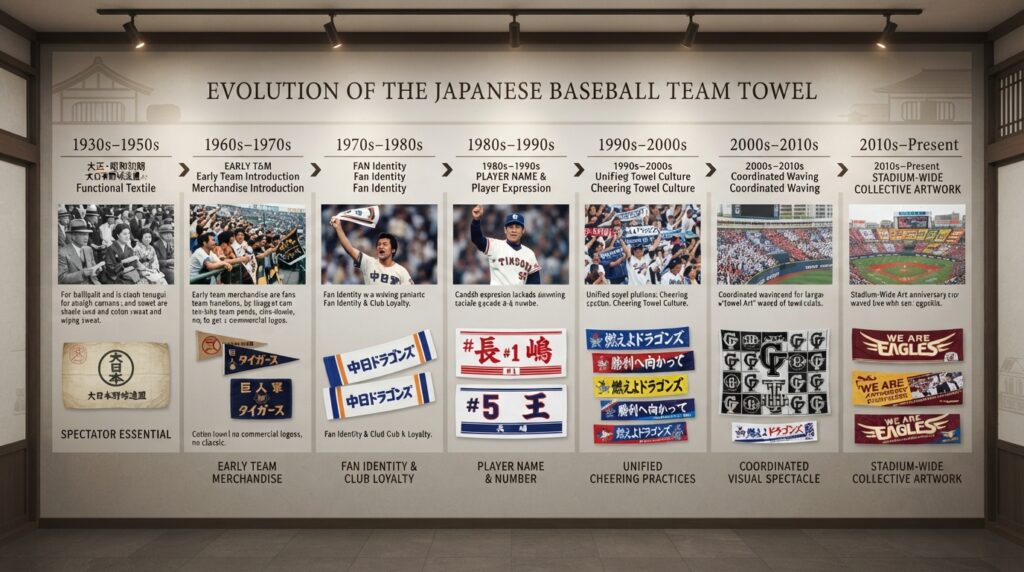
Figure 1. Evolution of the Japanese Baseball Team Towel
The timeline illustrates the gradual transformation of the towel from a personal textile object into a designed representation of team and player identity and, ultimately, into a participatory visual element of the stadium environment.
2.International Comparison & Innovation
This table 2-1 compares the role, visual characteristics, and fan functions of baseball towels in the United States, Japan, Taiwan, and the Dominican Republic. It highlights how the same textile medium can acquire different meanings and uses within different baseball cultures.
Table 2-1. International Comparison of Baseball Towels
| Dimension | United States | Japan | Taiwan | Dominican Republic |
|---|---|---|---|---|
| Representative Form | Rally Towel | Team / Player Towel | Cheering Towel | Baseball / Fan Towel |
| Primary Purpose | Rallying and team support | Player identification and cheering | Organized cheering and team support | Fan expression and baseball affiliation |
| Main Identity | Team | Player + Team | Team + Player | Player + Team |
| Key Visual Elements | Logo, colors, slogans | Name, number, typography, colors | Names, numbers, colors, slogans | Team/player graphics, colors |
| Player-Specific Use | Common | Highly prominent | Common | Common in fan merchandise |
| Team-Specific Use | Strong | Strong | Strong | Strong |
| Waving / Movement | Central | Central | Central | Varies |
| Coordinated Fan Use | Strong | Very strong | Very strong | Varies |
| Graphic Design Role | Strong | Very strong | Strong | Strong |
| Typography Role | Strong | Very strong | Strong | Strong |
| Collective Visual Effect | Strong | Very strong | Very strong | Varies |
| Artistic Character | Rally / performance | Player identity + participatory visual art | Collective cheering art | Fan / community expression |
| Museum Research Focus | How a towel creates team solidarity | How a towel transforms player identity into collective visual expression | How towels support organized fan performance | How baseball towels function within Dominican fan culture |
Japan: Artistic Uniqueness and Innovation of the Team Towel
Compared with baseball towel traditions in the United States, Taiwan, and the Dominican Republic, the Japanese Team Towel demonstrates a particularly strong integration of player identity, graphic design, movement, and collective participation. In the United States, the rally towel is primarily associated with creating excitement and supporting the team during important moments. In Taiwan, cheering towels function strongly within organized fan activities and collective support. In the Dominican Republic, baseball fan towels can be understood primarily through team, player, and community identity.
The Japanese Team Towel adds another artistic dimension by making player-centered visual identity a central feature. A player’s name, number, typography, and team colors are transformed into a portable graphic composition. When a single fan raises the towel, it expresses individual identification with the player. When hundreds of fans raise and wave similar towels together, the repeated designs create rhythm, movement, pattern, and large-scale visual unity.
Its innovation therefore lies not simply in the towel itself, but in how the object is activated by the crowd. The towel moves from textile design to identity symbol, then to collective performance and temporary stadium artwork. This makes the Japanese Team Towel a particularly valuable example of participatory baseball art, in which fans are simultaneously viewers, users, performers, and contributors to the final visual experience.
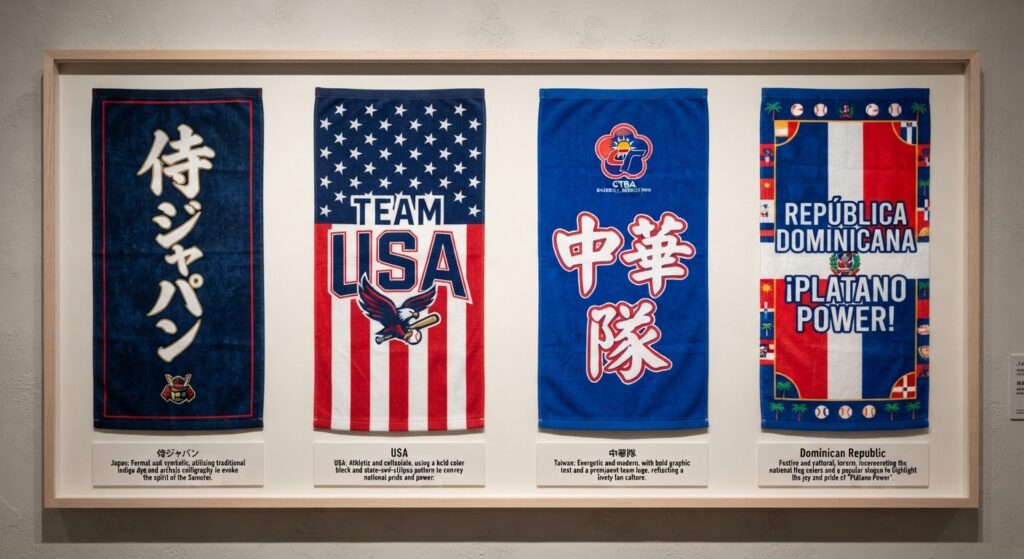
Figure 2. Comparative International Display — Cheering Towel Styles and Design Variations
3.Unique Artistic Analysis
The Japanese Team Towel is more than a piece of baseball merchandise. As a Baseball Art Object, it can be examined through its visual language, material qualities, composition, typography, symbolism, movement, and relationship with the human body. Its artistic value emerges from the interaction between what is designed on the towel and what happens when the towel is used.
This table 3-1 identifies the principal artistic characteristics that distinguish the Japanese Team Towel as a dynamic and participatory baseball art object.
Table 3-1. Unique Artistic Characteristics of the Japanese Team Towel
| Artistic Element | Artistic Function | Unique Interpretation |
|---|---|---|
| Typography | Communicates player identity | Name and number function as graphic portraiture |
| Color | Communicates team identity | Repeated colors create a collective visual field |
| Textile | Provides flexible surface | Material changes form through movement |
| Composition | Organizes visual elements | Designed to remain recognizable during use |
| Movement | Activates the object | Static design becomes kinetic expression |
| Repetition | Creates visual rhythm | Multiple towels produce collective patterns |
| Scale | Expands from object to stadium | Individual object becomes environmental art |
| Participation | Involves spectators | Fans become performers and visual elements |
| Temporality | Exists during the cheering event | Artwork can be created and disappear within the same event |
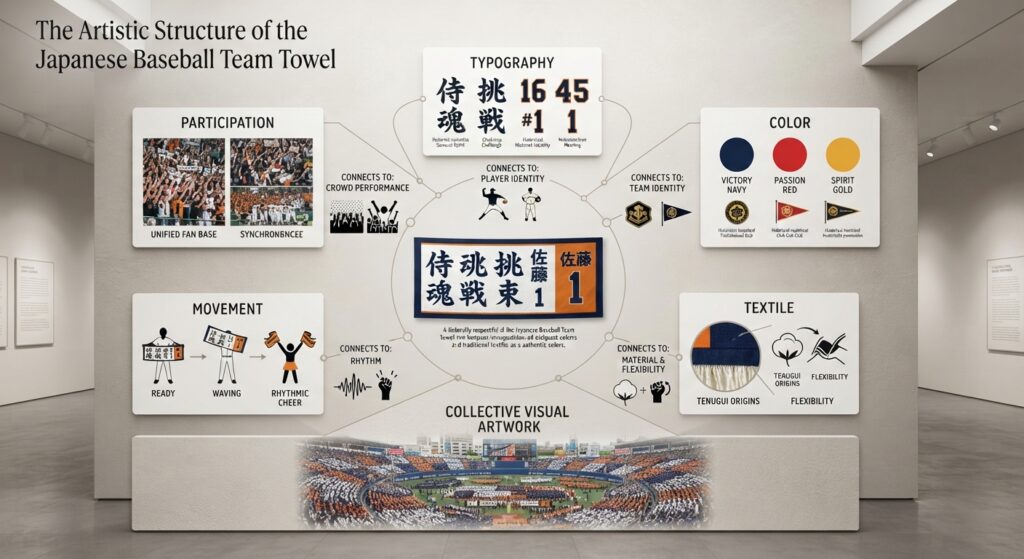
Figure 3. Artistic Structure of the Japanese Team Towel
The diagram illustrates how typography, color, textile material, movement, and spectator participation interact to transform a functional fan object into a dynamic form of baseball visual art.
4.Artistic Transformation and Creation
Artistic Transformation and Creation: Expanding the Cultural Object into New Mediums. The Japanese baseball team towel is more than a piece of sporting merchandise; it is a rich cultural canvas. By abstracting its core elements—textile flexibility, bold typography, ritualistic movement, and collective harmony—artists can translate this object into entirely different artistic disciplines.
Two powerful examples of how this object can be reinterpreted into distinct art forms include:
1. Ukiyo-e (Traditional Japanese Woodblock Printing)
- The Concept: Translating modern stadium culture back into the classic Edo-period visual tradition of Ukiyo-e (pictures of the floating world).
- How it is Applied: Artists can reimagine contemporary baseball scenes using traditional woodblock printing techniques, pigments, and compositions. Modern fans holding cheering towels can be depicted with the elegant, sweeping linework, flat planes of color, and expressive facial features traditionally used for kabuki actors or sumo wrestlers. In this translation, the stadium becomes the new “floating world,” and the team towel replaces the traditional hand towel or actor’s prop, bridging centuries of Japanese visual culture.
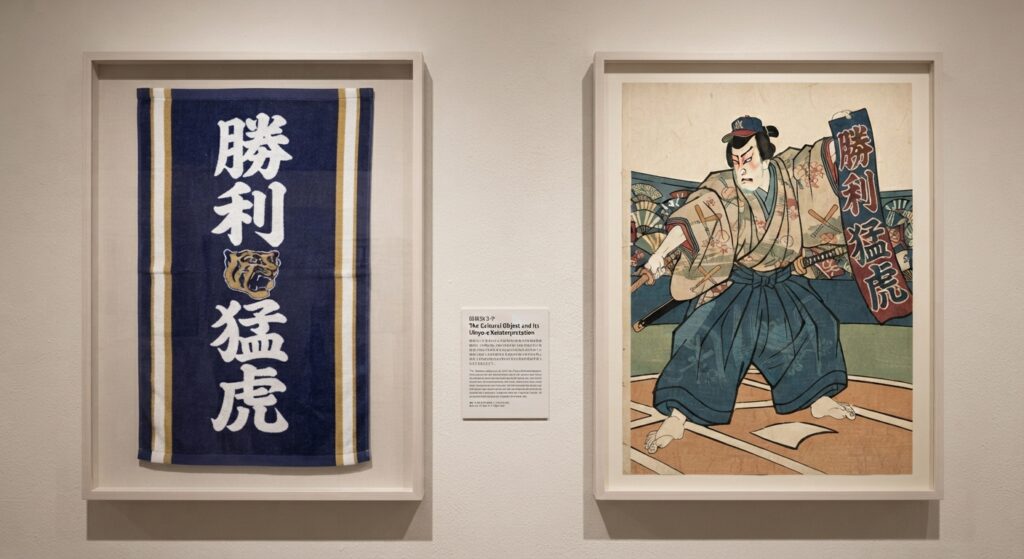
Figure 4. The Cultural Object and Its Ukiyo-e Interpretation
2. Fine Art Crochet and Soft Sculpture
The Concept: Extracting the material soul of the tenugui and baseball towel to create contemporary, non-functional fiber art installations.
How it is Applied:Instead of using fabric for simple utility or fandom, a fiber artist can deconstruct the ouen taoru (cheering towel) concept and re-imagine it entirely through meticulous hand-crochet. This transforms the mass-produced textile into a unique, sophisticated soft sculpture. By meticulously crocheting the deep indigo field, the cream kanji (e.g., “猛虎” and “熱血”), and the player number (“#85”) using specialized yarn, the artist highlights the transition from a stadium souvenir to a tactile monument of human craft, memory, and collective texture. The finished piece, complete with crocheted fringe, is elevated as a framed fine art object rather than a sweat-stained accessory.
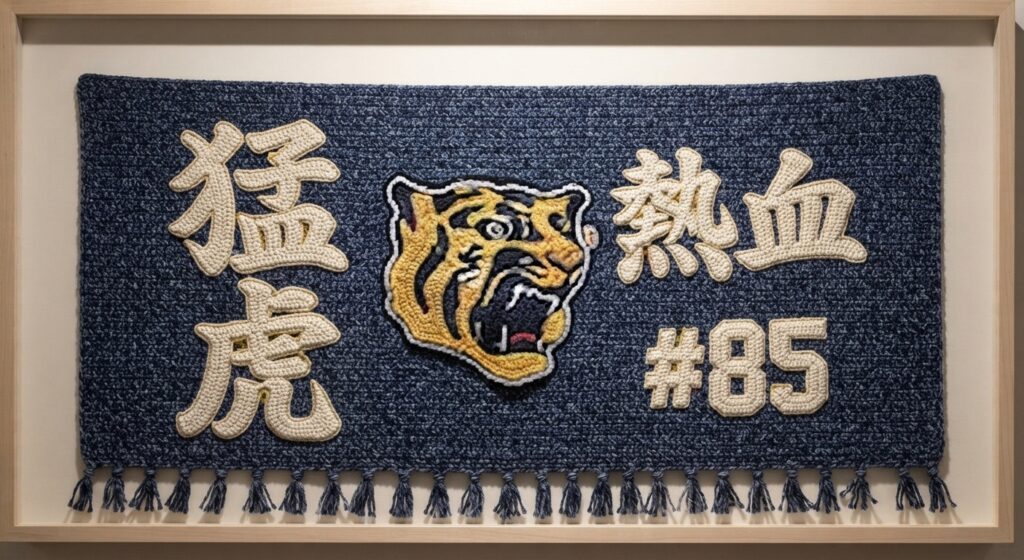
Figure 5. Fine Art Textile Reinterpretation — The Hand-Crocheted Cheering Towel (Ouen Taoru).
5.Art & SAT Education
6.Game Zone
- The Ouendan Pattern Memory Game: Inspired by classic Japanese stadium cheering squads, players watch a sequence of team towels light up and must repeat the rhythm pattern correctly to drive up the stadium cheer meter)
- The Stadium Shop Manager: A business simulation where you manage a merchandise booth outside a Japanese baseball stadium, stocking and selling team rally towels (tenugui) based on weather and fan demand.
Reference
Ashburne, N. (2021). Textiles of Japan: Tradition, Technique, and Design. Schiffer Publishing.
The Japan Times. (2019, August 12). Tenugui: The traditional Japanese hand towel that refuses to go out of style.
Textile Institute of Japan. (2023). Chusen Dyeing Techniques and Color Fastness in Modern Supporter Goods. Journal of Textile Engineering and Design, 41(2), 112-120.