
1️⃣ Exhibit Name
“We Want a Hit!” Sign
2️⃣ Collection & Image
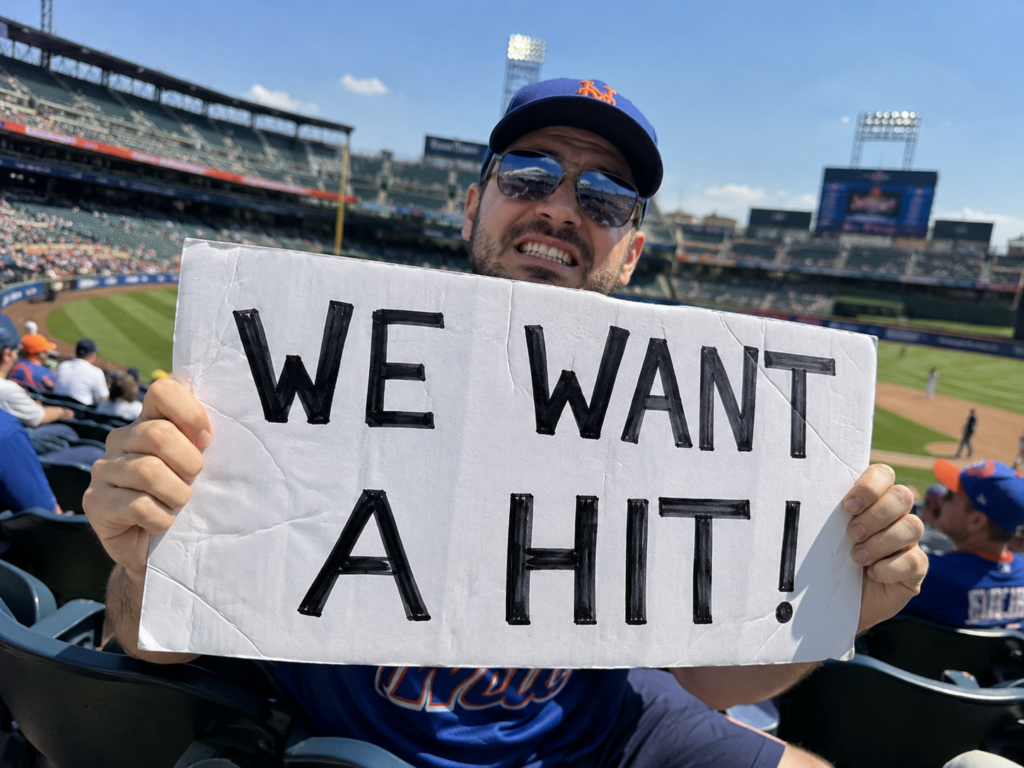
Figure 1 – “We Want a Hit!” Sign – Camera Photo Style
A humorous white sign with bold black letters reading “We Want a Hit!” held by a desperate fan in a struggling team’s section.
3️⃣ Gallery Location
Fan Culture Wing › Signs Hall › United States
4️⃣ Exhibit Background
The “We Want a Hit!” sign is a humorous fan‑made placard that appears when the home team’s offense is completely shut down – no hits for several innings or even an entire game. Unlike the “K” sign (celebration of pitching dominance), this sign is an expression of frustration, self‑deprecation, and loyalty. It is often accompanied by a count of hitless innings (e.g., “0 hits in 7 innings”) or a running tally of consecutive hitless games. The sign is not tied to any specific team; it is a universal fan response to offensive futility, seen everywhere from Little League to the World Series.
The earliest known photograph of a “We Want a Hit!” sign dates to the 1970s, but the tradition likely emerged as baseball’s modern pitching dominance grew in the late 1960s (the so‑called “Year of the Pitcher” in 1968). Fans needed a way to mock their own team’s struggles without being cruel – humor softened the pain.
5️⃣ Period & Location
- Period: 1970s – present
- Location: Ballparks across the United States (and occasionally internationally when fans adopt American‑style signs)
6️⃣ Material & Dimensions
- Material: Cardboard, poster board, foam core, often salvaged from pizza boxes or shipping cartons
- Dimensions: Typically 18″ × 24″ (45 cm × 60 cm) – large enough to be seen on television
- Lettering: Hand‑drawn with black marker or spray paint, sometimes with team colors added

Figure 1. “We Want a Hit!” Sign – Batik Style (Textile & Fiber Arts)
Wax‑resist dyed textile featuring the fan‑made sign, with traditional Indonesian batik patterns and crackled wax texture.
7️⃣ Narrative Story
The Agony of the Hitless Drought
Baseball is a game of failure. The best hitters fail seven out of ten times. But when a team goes six, seven, eight innings without a single hit, the mood in the stands shifts from hopeful to absurd. Fans begin to laugh at the misery. The “We Want a Hit!” sign is that laugh made visible.
In 1993, the San Diego Padres endured a 21‑inning scoreless drought over three games. Fans held up signs reading “WE WANT A HIT – ANY HIT!” When Tony Gwynn finally singled, the crowd gave a standing ovation – not for the hit itself, but for the end of the embarrassment. That moment was captured on SportsCenter and became a classic example of fan humor.
The Sign as a Pressure Release
Sports psychologists note that self‑deprecating humor helps fans maintain loyalty without experiencing toxic negativity. A fan screaming insults at players may be venting anger; a fan holding a “We Want a Hit!” sign is inviting everyone to share in the joke. The sign is often accompanied by exaggerated pleading gestures – fans on their knees, hands clasped as if praying.
During the 2021 Arizona Diamondbacks historically bad season (they lost 117 games), a group of season‑ticket holders created a digital counter that updated after every hitless inning. When the team finally broke a 24‑inning hitless streak in August, the fans waved a giant “WE GOT A HIT!” banner – the triumphant sequel to the original sign.
Variations Across the Country
- Boston (Fenway Park): Fans have been known to hold signs reading “GIVE US A BLOOP!” – a reference to the short, soft hit that barely clears the infield.
- Chicago (Wrigley Field): During the 1969 “Miracle Mets” season, Cubs fans held “WE WANT A HIT” signs as their team collapsed – a memory that still stings.
- Los Angeles (Dodger Stadium): In the 2018 World Series, when the Dodgers were no‑hit through six innings, a fan’s “WE WANT A HIT” sign was shown on the jumbotron, prompting a collective groan‑laugh from 50,000 people.
The Sign’s Legacy
The “We Want a Hit!” sign has never been commercialized. No team sells it in their gift shop. It remains pure fan expression – a grassroots artifact of baseball’s unique relationship with failure. In 2019, the Baseball Hall of Fame considered acquiring a “We Want a Hit!” sign from the Padres’ 1993 drought for its “Pride and Passion” exhibit, recognizing it as a genuine piece of fan culture. The sign is a testament to resilience: the ability to laugh when your team is at its worst.
Think About It
- Why do fans use humor instead of anger when their team is struggling badly?
- How does the “We Want a Hit!” sign differ from signs that demand a player be traded or fired?
- What does the existence of this sign tell us about baseball’s acceptance of failure as part of the game?
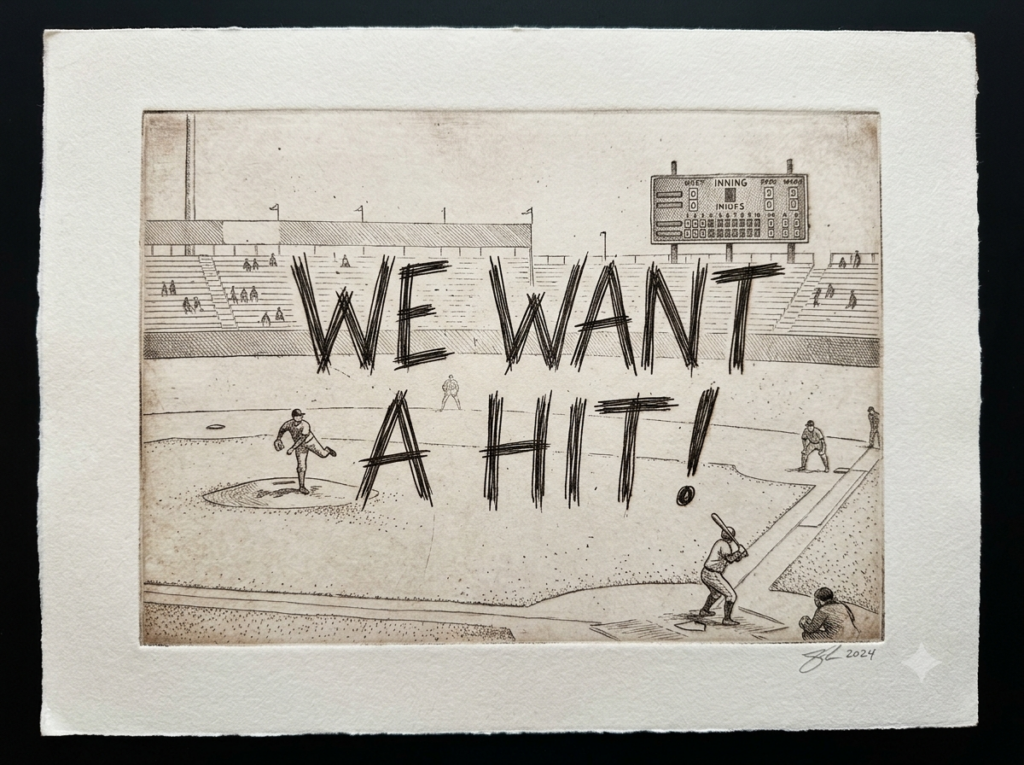
Figure 1. “We Want a Hit!” Sign – Etching Style (Printmaking Arts)
Intaglio print with fine cross‑hatched lettering and plate marks, evoking the desperation of a hitless streak.
8️⃣ Current Status & Applications
- Status: The sign appears regularly during no‑hit bids (when the opponent is throwing a no‑hitter) and during extended slumps. It is a perennial meme on baseball social media.
- Applications: The sign has inspired digital versions (on Twitter, Reddit) where fans post “WE WANT A HIT” threads during live games.
- Suggested companion exhibits: Display alongside scorecards from no‑hitters and the “K” sign (pitching dominance vs. hitting futility).
9️⃣ Significance & Educational Value
- Significance: The “We Want a Hit!” sign represents fan resilience and the healthy use of humor to cope with sports disappointment. It is a grassroots artifact – never commercialized, always authentic.
- Educational value: Encourages visitors to consider how humor functions as a social lubricant in shared disappointment, and how fandom can transform failure into community bonding.
🔟 References
- The San Diego Padres’ 21‑inning drought. Baseball Reference, 1993.
- Arizona Diamondbacks’ 2021 season: A study in futility. The Athletic, 2021.
- “We Want a Hit!” signs through history. Sports Illustrated, 2019.
- Fan psychology: Why humor helps us stay loyal. Society for American Baseball Research (SABR), 2015.
- Baseball Hall of Fame – Pride and Passion exhibit notes. Cooperstown, 2019.